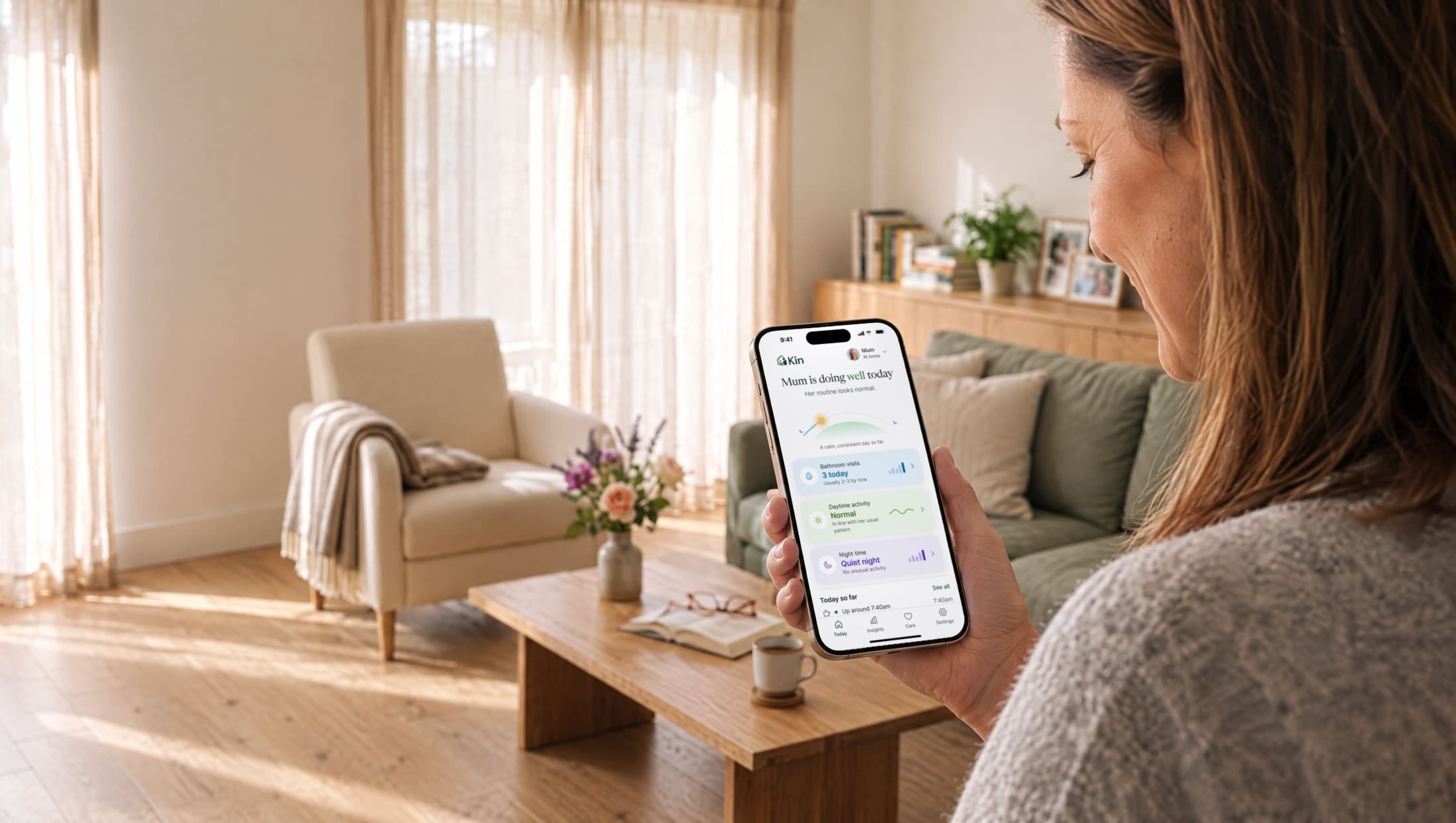
A woman at home looking at health and routine information on her phone

We’re making the home the sensor. Starting with everyday care and clinical assessment, Oghma is developing radar sensing to help you understand changes in your body and everyday life.

Kin / Everyday careFlow / Clinical assessment
Our productsKin / Flow

Two products, built around radar sensing. Kin focuses on everyday life in aged care. Flow focuses on clinical assessment at home, starting with sleep apnea.

01 / Aged care

Kin

The patterns of everyday life.

Kin uses radar sensors to pick up movement and routine trends in the home, with a focus on falls and bathroom visits. The aim: a clearer picture of how someone is getting on as they age.

What Kin focuses on
  • Falls and changes in movement
  • Bathroom visit patterns
  • Changes in everyday routines
02 / Clinical assessment

Flow

Clinical insight from home.

Flow brings a clinical focus to home sensing. Starting with radar-based breathing measurements and sleep apnea assessment, the aim is to make assessments traditionally carried out in a clinic more accessible at home.

What Flow focuses on
  • Breathing measurements during sleep
  • Sleep apnea assessment
  • Trends to inform clinical review
Explore our home-sensing vision
The Oghma vision

A tricorder,
built into the home.

Science fiction imagined a handheld device that could tell us how someone was doing. We’re pursuing that idea at the scale of a home, starting with radar.

Our aim is to bring basic vital measurements and tools to aid self-diagnosis of medical conditions into everyday life. From general care to assessments traditionally carried out in a clinic, such as sleep apnea, we want to help people understand their health and take an informed next step.

A development vision, with Kin and Flow as our starting points.

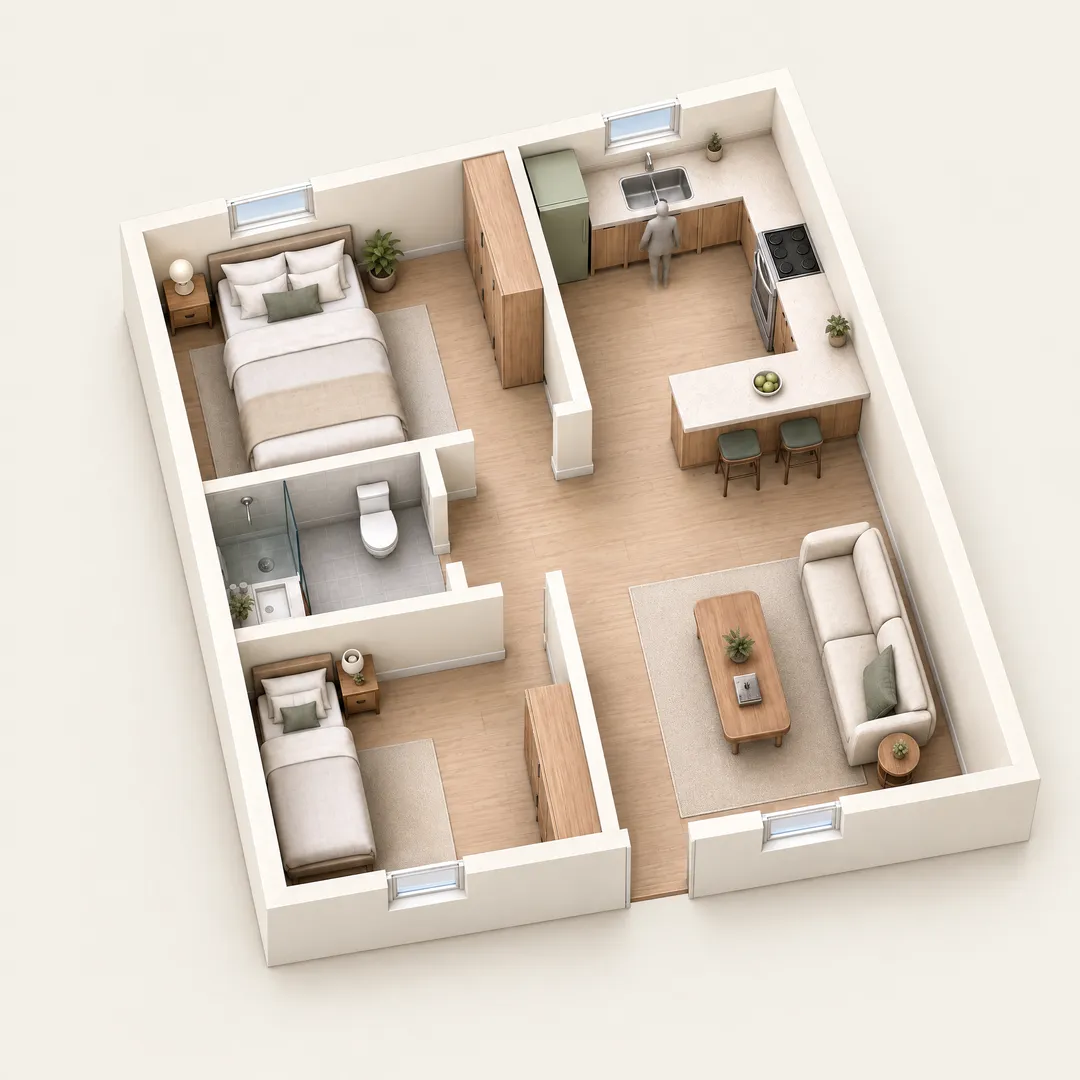
Isometric view of a furnished home showing the bedroom, bathroom, kitchen and living spaces
One home. A fuller picture.Care / Sleep / Vital measurements
Robotics readyThe next horizon

A robot entering a home needs context: where someone is, what their usual day looks like, and what has changed.

Our ambition is for Oghma’s home sensing to provide that foundation, helping future care robots respond to people’s needs with a fuller picture of life at home.

  1. 01 / Sense

    Notice what changes.

    Start with radar signals from movement, routines and breathing.

  2. 02 / Understand

    Give signals context.

    Build a picture of daily life that could inform future robotic assistance.

  3. 03 / Assist

    Help with everyday care.

    Work towards robots that can offer useful support, with people in control.

Our development direction: connecting home sensing with future robotic assistance.